Ziwei Nina Chen

My name is Ziwei Nina Chen. I am a first-year PhD student in Computer Science & Engineering at UC San Diego, advised by Prof. Kristen Vaccaro. I am also a member of the Design Lab. I am are interested in people-centered AI systems that mediate communication, shape interactions, and influence human behavior. My current work spans three directions: (1) helping designers communicate UI transition animations more effectively with developers, (2) simulating realistic spoken conversations through LLM agents, and (3) identifying harmful patterns in LLM-generated front-end code, such as dark patterns.

Email  /  CV  /  Scholar  /  Github

profile photo

📰 News

Jan 2026

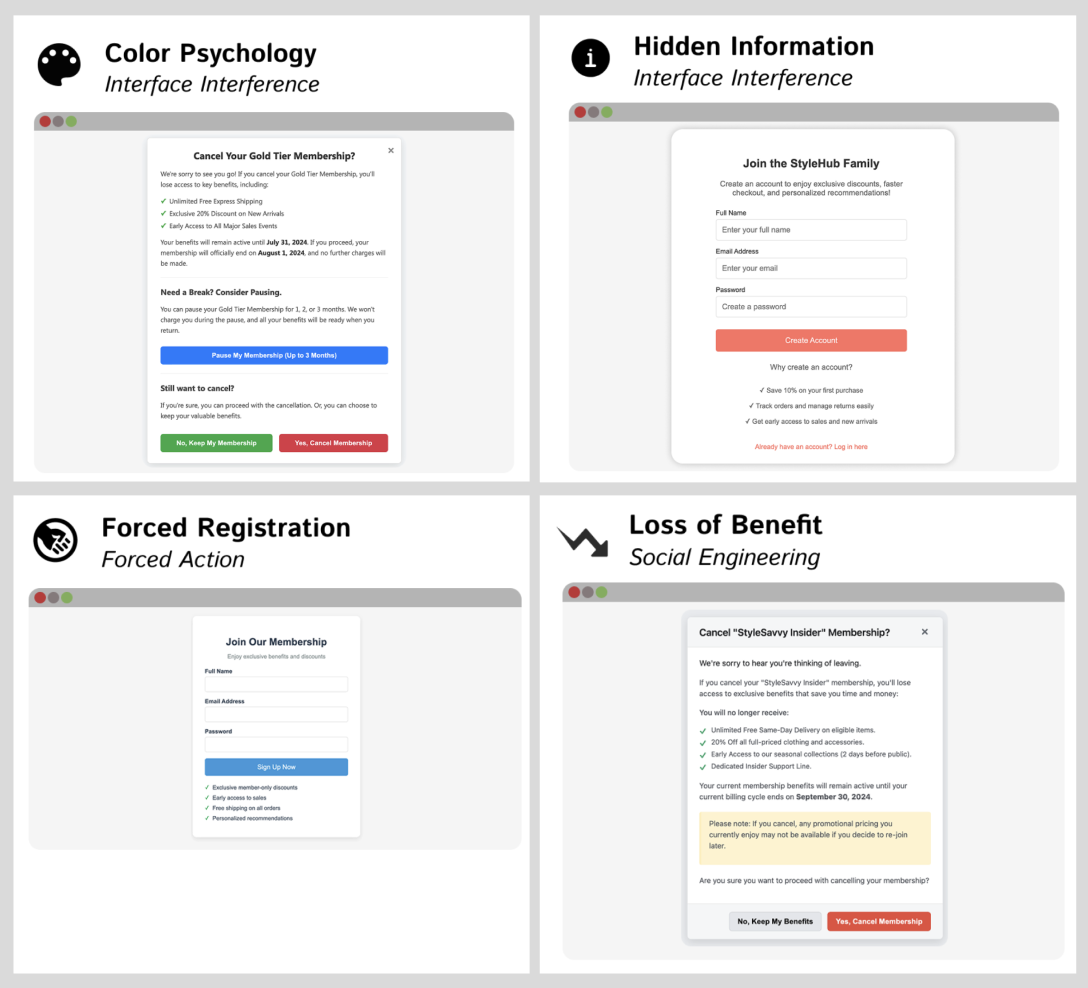
🎉🎉 Our paper “Deception at Scale: Deceptive Designs in 1K LLM-Generated E-Commerce Components” has been accepted to CHI 2026! I will present our work at the conference in Barcelona this April.

Sept 2025

I wrapped up my chapter at Dusty Robotics as a UX designer, and started my PhD program at UC San Diego. An exciting journey ahead!

More news

Publications

Deception at Scale: Deceptive Designs in 1K LLM-Generated E-Commerce Components
Ziwei Chen, Jiawen Shen, Luna, Hanyu Zhang, Kristen Vaccaro

CHI 2026

Recent work has shown that front-end code generated by Large Language Models (LLMs) can embed deceptive designs. To assess the magnitude of this problem, identify the factors that influence deceptive design production, and test strategies for reducing deceptive designs, we carried out two studies which generated and analyzed 1,296 LLM-generated web components, along with a design rationale for each.

Where’s the Water? Supporting Clean Water Access for the Homeless Community
Alexandra Balmaceda*, Ziwei Chen* (* denotes equal contribution)

CHI EA 2024 | CHI Student Design Competition Winner (top 2 out of 43 submissions)
Video Presentation/ Winner Posts

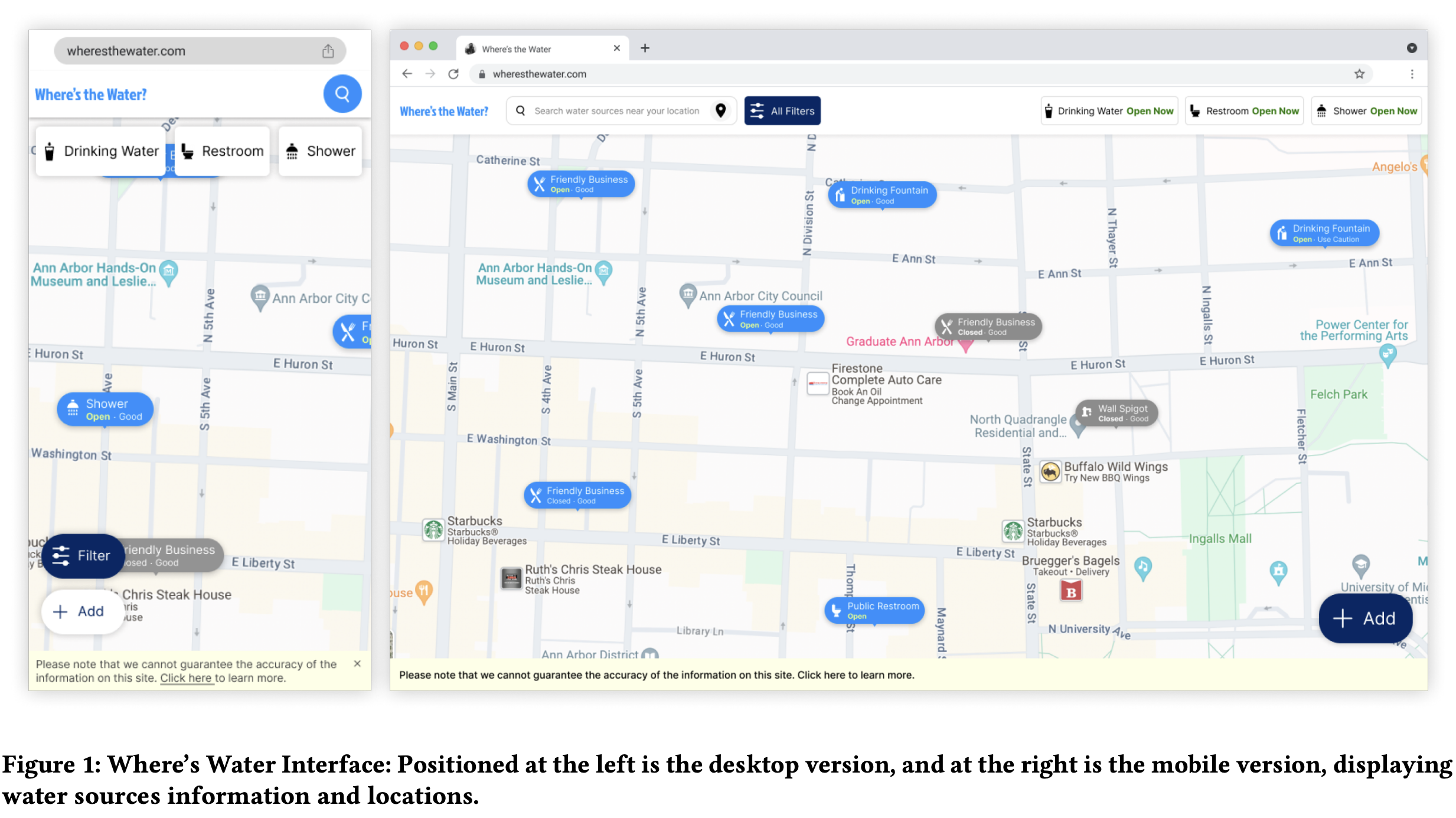
Access to clean water is essential, yet it poses a significant challenge for the homeless population. Our project, "Where's the Water" is a web-based tool designed to improve water access for the homeless community. It maps nearby clean water sources like drinking fountains, public restrooms, and showers. The tool's design was informed through interviews with the homeless community in Ann Arbor, Michigan.